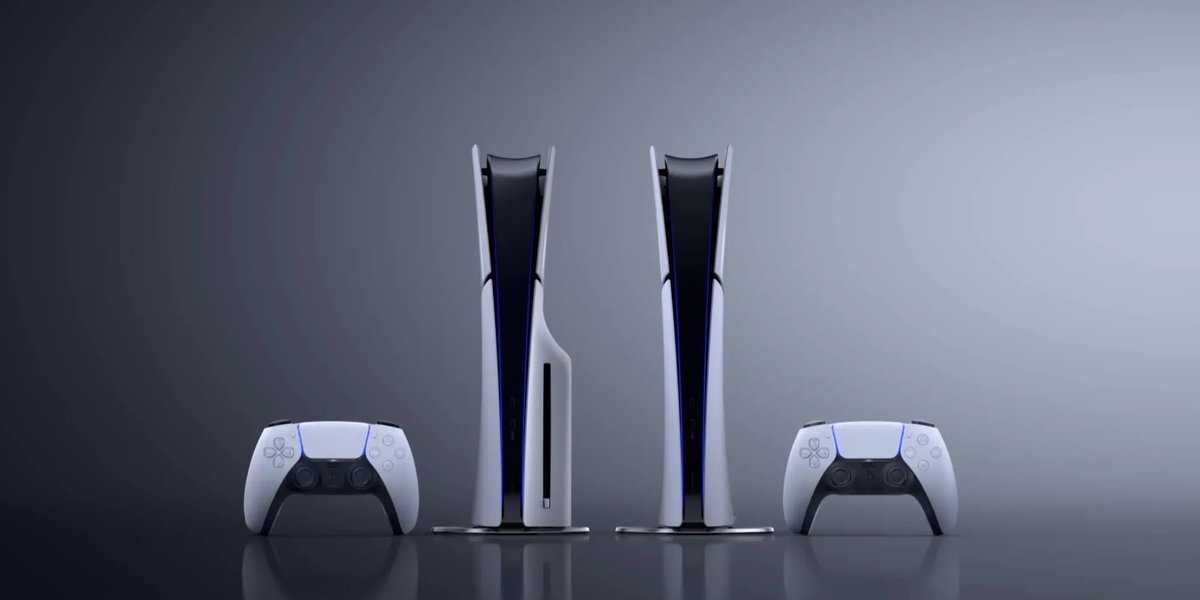
One year after its highly anticipated launch, the PlayStation 5 Pro remains a topic of fervent debate among gamers. Positioned as a mid-generation hardware refresh, its promise was clear: deliver enhanced resolutions, smoother frame rates, and leverage cutting-edge AI-based upscaling for the ultimate console experience. But has it truly delivered on that promise, or is it still finding its footing in the competitive gaming landscape?
The consensus after a year is nuanced. While the PS5 Pro undeniably provides a superior experience in titles optimized for its advanced hardware, it hasn't consistently delivered the "game-changing" revolution many hoped for. This flagship console aims for peak performance, but the question remains: is that peak worth the investment for you? Let's break down everything you need to know.
Unpacking the Beast: What Powers the PS5 Pro?
At its core, the PS5 Pro is built for power. It boasts a GPU that's a staggering 62% faster than the original PS5, pushing 16.7 teraflops. Alongside this, you get 2GB of extra DDR5 memory, a spacious 2TB SSD (double the original's 825GB), and support for Wi-Fi 7, ensuring lightning-fast downloads and online play. Crucially, its signature innovation is PlayStation Spectral Super Resolution (PSSR), an AI upscaling solution designed to enable higher frame rates and graphical settings without taxing developers as much.
While it shares the same AMD Zen 2 CPU as the base PS5, the combination of these upgrades suggests a significant leap in potential. For a deeper dive into the specific components and their capabilities, you’ll want to Discover PS5 Pro enhancements See PS5.
Pro vs. Standard: A Hardware Face-Off
So, how does all that cutting-edge tech translate when compared to the existing PlayStation 5 models? The PS5 Pro launched with an RRP of £700/$700, making it the priciest PlayStation console to date. Notably, it doesn't include a disc drive by default, a feature that adds another £99/$79 if you choose to purchase it separately. It maintains a large form factor, similar to its predecessor, but now sports a sleek matte finish and removable side plates.
Understanding these distinctions is key to evaluating its value proposition. From raw power to storage capacity and even the inclusion of a disc drive, there are several factors that set the Pro apart. To fully understand these differences and decide which console aligns with your gaming habits, it’s essential to Compare PS5 Pro and PS5. Which console truly offers the best fit for your setup.
The Promise and Reality of Gaming Performance
The true test of any console is how games actually play. The PS5 Pro's performance can be a tale of two extremes, depending heavily on how developers have chosen to optimize their titles.
Where the PS5 Pro Shines Brightest
When a game receives a dedicated Pro patch, the results can be genuinely impressive. Players often see a choice between better frame rates, superior graphical options, or a combination of both. Some titles have been particularly lauded for their PS5 Pro enhancements:
- Assassin's Creed Shadows: Enjoy ray tracing at a smooth 60fps, a significant boost over the 30fps/40fps seen on the standard PS5.
- Final Fantasy 7 Rebirth: The Pro patch remarkably improves on the base PS5's often blurry performance and sluggish quality modes, offering a much sharper and more fluid experience.
- Kingdom Come Deliverance 2: Delivers both higher resolutions and improved frame rates, making the rich world even more immersive.
- Ghost of Yōtei: Features exclusive ray tracing support and maintains a remarkably steady performance throughout.
- Marvel’s Spider-Man 2: Offers two distinct Pro modes: "Fidelity Pro" for a sharp image with enhanced ray tracing, and "Performance Pro" for a consistent 60fps experience powered by PSSR.
- The Last of Us Part 1 & 2: Pro modes leverage PSSR to deliver crisp 4K resolution at a buttery-smooth 60fps.
Other games that have seen commendable boosts include Gran Turismo 7, Control: Ultimate Edition, Horizon Forbidden West, Ninja Gaiden 4, Monster Hunter Wilds, Forza Horizon 5, Death Stranding 2, Space Marine 2, Battlefield 6, Resident Evil Village, Armored Core 6, Hellblade 2, Stellar Blade, The Callisto Protocol, Demon's Souls, The Crew: Motorfest, and Metaphor: ReFantazio.
The Hurdles: Where the Pro Stumbles
Despite these successes, the PS5 Pro's journey hasn't been without its bumps. Some titles show less significant improvements, or even inconsistent performance, highlighting the challenges of mid-gen upgrades.
- CPU Limitations: The PS5 Pro's CPU is essentially the same as the base model, meaning games heavily reliant on CPU power can still struggle. Titles like Metal Gear Solid Delta experience frame drops to the mid-30s during intense combat, and Warhammer 40K: Space Marine 2 can dip below 60fps with numerous enemies on screen. Even Borderlands 4, built on Unreal Engine 5, can be CPU-limited, hindering its potential frame rate gains.
- PSSR Problems: While PSSR is a powerful tool, its implementation hasn't always been perfect. In certain scenarios, particularly with advanced lighting, ray tracing, and complex particle systems, PSSR has been reported to make games look worse, introducing visual artifacts. Dragon's Dogma 2, Silent Hill 2 Remake, and Silent Hill f have all been cited for negatively impacted visuals with Pro patches. Frustratingly, there's no system-level option to disable problematic Pro patches once installed.
- Other Mixed Results: Even highly anticipated titles like Astro Bot and Doom: The Dark Ages have shown limited ambition in their Pro upgrades. Call of Duty Black Ops 6 offered good anti-lag modes, but PSSR speckling issues persisted for some players. Black Myth: Wukong, an Unreal Engine 5 title, did, however, manage a decent PSSR implementation.
These varied outcomes underscore the importance of per-game optimization. To understand the granular details of how specific titles perform and what visual enhancements you can expect, you’ll want to Improve gaming performance and visuals by diving into our dedicated performance breakdown.
Who Needs the PS5 Pro? Identifying the Ideal Player
Given the PS5 Pro's strengths and weaknesses, it's clear it's not for everyone. This console is best described as the "best way to play optimized PS5 games" for a very specific segment of the gaming community. If you are a hardcore enthusiast who prioritizes peak graphical performance and the highest possible frame rates, especially if you own a high-end 4K or even an 8K television, then the PS5 Pro is likely designed with you in mind.
However, for the vast majority of players, the standard PS5 or the PS5 Slim remains more than sufficient. These consoles still deliver an incredible gaming experience, and for many, the incremental improvements offered by the Pro simply don't justify the extra cost. Deciding if the PS5 Pro aligns with your gaming philosophy and existing setup is crucial, and you can truly assess if it's the right fit by asking yourself, Is the PS5 Pro for you?
The Price Tag: Is the Performance Worth the Investment?
With a launch price of £700/$700 (plus potential disc drive costs), the PS5 Pro represents a significant financial investment. When the PS4 Pro launched, it had a clearer mission: upscale 1080p content to 4K, and developers found it relatively easy to leverage its power for more readily apparent gains. The PS5 Pro, by contrast, offers roughly a 30% rasterization jump, but its full potential is often constrained by the CPU and memory bandwidth. This has led to inconsistent developer adoption and, at times, uncertain update quality.
Therefore, the "worth" of the PS5 Pro isn't just about its technical capabilities but also about the perceived value relative to its cost. Are you getting enough extra performance to justify the premium price, especially when some games show only marginal improvements or even suffer from PSSR issues? For a thorough breakdown of the console's financial implications and a detailed cost-benefit analysis, make sure to Explore Price, Value, and Costs before making your decision.
The Future of Pro: Waiting for Its Moment?
While the PS5 Pro's first year has been a mixed bag, its story is far from over. Many analysts and insiders anticipate that 2026 could be the console's true "year of the Pro." This projection is fueled by upcoming, highly anticipated titles such as Marvel's Wolverine, Grand Theft Auto 6, and "PlayStation's first-ever Halo" (a placeholder name for a new flagship exclusive). These games are expected to be built from the ground up to better leverage the console's unique upgrades and PSSR capabilities, potentially offering the truly game-changing experiences players have been yearning for.
The PS5 Pro stands as a console ahead of its time, a powerful piece of hardware waiting for the software to catch up. For now, it offers the best way to play optimized PS5 games for those who demand uncompromising performance. Its full potential, however, might just be around the corner, waiting for the next generation of games to fully unlock its capabilities and cement its place as a truly essential upgrade.